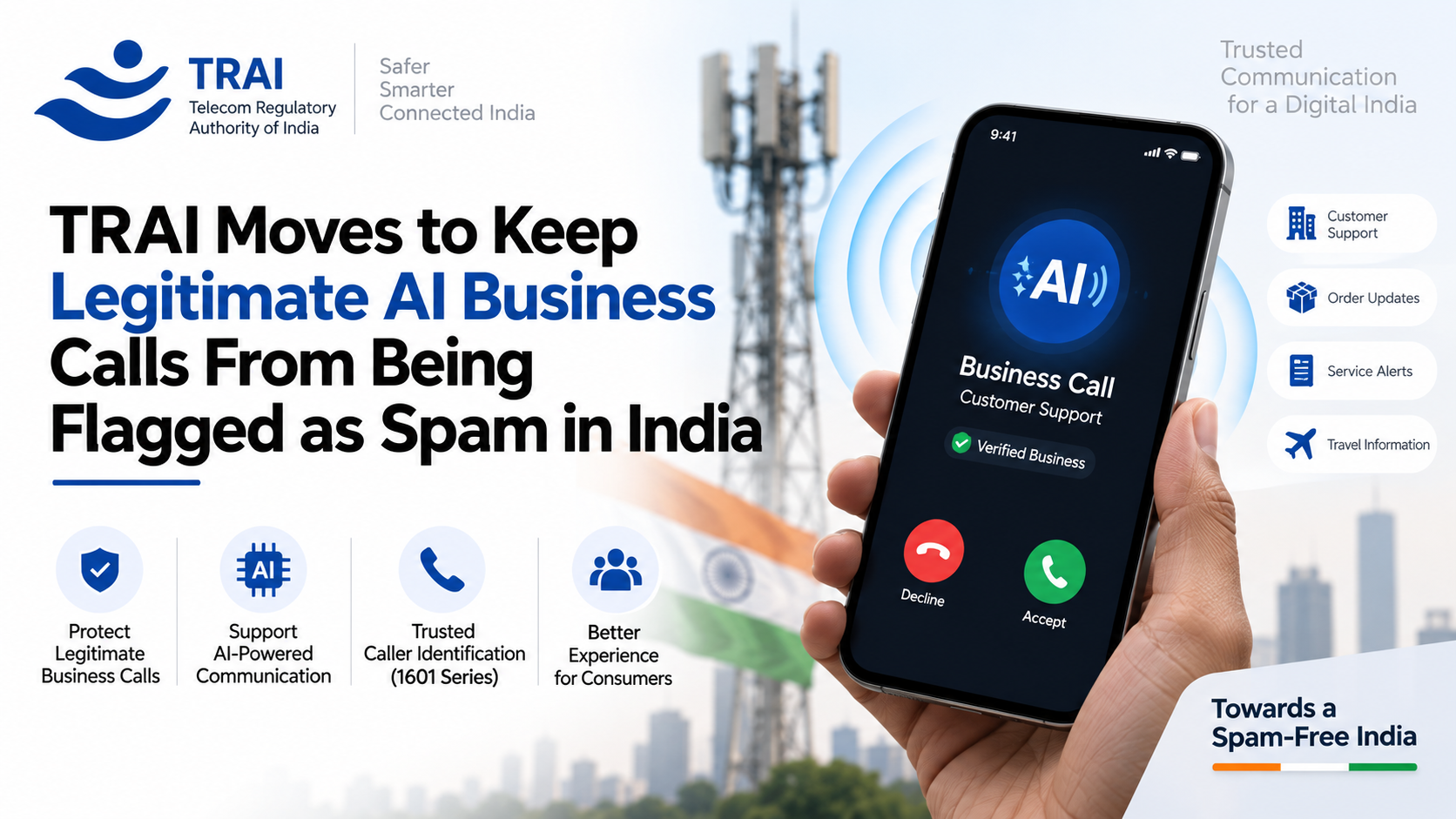
India's telecom regulator is preparing measures to ensure that legitimate AI-powered business calls are not mistakenly classified as spam, as companies increasingly turn to voice AI for customer service and other business communications.
The Telecom Regulatory Authority of India (TRAI) is looking at ways to distinguish genuine AI-enabled calls from unwanted commercial communication, according to a report by *The Economic Times*. The move comes as the use of artificial intelligence in voice-based customer interactions grows, creating a new challenge for telecom networks and automated spam-detection systems.
AI voice systems can now handle conversations, provide customer updates, assist with support requests and make automated calls at a scale that would previously have required human agents. While that can make customer service faster and cheaper, the high volume and automated nature of such calls can also make them resemble the calling patterns associated with spam.
That creates a difficult problem for telecom operators. India's networks have become increasingly aggressive in identifying unwanted commercial communication, but a system that blocks calls too broadly could also prevent consumers from receiving legitimate calls from businesses they already deal with.
TRAI has been building a framework around trusted caller identification to address part of this problem. In August, the regulator directed the introduction of the 1601 numbering series for service and transactional voice calls from eligible entities in sectors outside banking, financial services and government. The first phase covers sectors including utilities, courier and logistics.
The idea is to give legitimate service calls a recognisable identity instead of allowing businesses to rely on ordinary 10-digit numbers. TRAI's framework specifically separates service and transactional communication from promotional calls, which are governed differently under India's commercial communication rules.
The distinction is becoming increasingly important as AI enters the voice-calling ecosystem. An automated call from a delivery company about an order, for example, is fundamentally different from an unsolicited sales call generated by an automated system. Both may be made using similar technology, but their purpose and relationship with the recipient are very different.
TRAI has already been using artificial intelligence and machine learning to strengthen its fight against unwanted commercial communication. The regulator's directions include the AI/ML-based UCC_Detect system, which is intended to support identification of suspected unsolicited commercial communication and enable action across telecom operators.
The scale of the problem is considerable. During the first quarter of financial year 2026-27, TRAI took action against more than 1.83 lakh telecom resources as part of its efforts to curb unsolicited commercial communication. The regulator also blacklisted hundreds of senders following complaints and investigations.
At the same time, TRAI has recognised that legitimate communications need stronger protection from indiscriminate filtering. In a July clarification, the regulator said that calls originating from designated 1600-series numbers must not be tagged, blocked or filtered under the relevant commercial communication framework.
The challenge becomes more complicated with AI because the technology itself does not determine whether a call is legitimate. A bank's automated voice assistant, a courier's delivery notification or an airline's service call could all use AI, while a fraudulent caller could use exactly the same technology.
That means the regulatory focus is likely to remain on who is making the call, why it is being made and whether the communication complies with India's commercial calling rules, rather than simply allowing or blocking calls based on whether AI is involved.
For consumers, the objective is straightforward: fewer unwanted calls without missing important communications. For businesses, the emerging framework means that adopting an AI voice agent will not by itself provide an exemption from spam and telecom regulations.
The development also signals a broader change in how India's telecom industry is dealing with artificial intelligence. AI is increasingly becoming part of both sides of the problem telecom operators are using AI to detect spam, while businesses are using AI to make calls.
As voice AI becomes more common, regulators will need to ensure that automated systems can identify legitimate communications without creating another route for scammers to exploit. TRAI's latest move is an early step towards making that distinction clearer.